For Shopify stores selling custom wallpaper and wall coverings
A wallpaper order is a measurement, a material, a repeat and a panel layout. Every one has to be right before anything prints. Get one wrong and you're reprinting a wall.
Appify prices the wall from the customer's own measurements, previews the design at true scale, plans the panels, and sends production an approved proof.
14-day free trial. Free on Shopify Partner dev stores.
"The proof approval is the part that changed our week. Customers sign off before they pay, so there is no chasing anyone for a yes."
Your wall
Style
Material
Printed panel width
What to check before you install anything
You find out fast. Three things worth checking before you install anything, because a wall needs all three.
Custom printed wall coverings are not returnable. When the measurements are wrong, the material is scrapped and you absorb it. Pricing from numbers the customer entered and confirmed puts that risk where it belongs.
Your roll has a fixed width and length. The wall has neither. Set both, add your overage for trim and pattern match, and the calculator works out what the job needs.
A pattern that looks delicate in a swatch can arrive twice the size they imagined. Showing it at the proportions of their real wall is the difference between an order and a refund.
What your sales reports don’t show you
Someone was ready to buy, hit something the page couldn’t do, and left without a word.
Six ways it happens. Under each one, the thing that stops it.
Install one. Build a test wallpaper. Enter a real wall and find out it can’t price it. Uninstall. Most people do that three or four times.
→ Eight questions that rule an app out in two minutes, without installing itYour materials don’t cost the same to print. The app couldn’t hold a rate per material, so one flat rate covers all of them, and it’s wrong for every one.
→ A rate per material, applied to the wall they actually measuredThey had the wall measured and the design chosen. Your page offered a starting-from price and a contact form. Somebody faster gave them a number.
→ Any price calculated instantly, however complex the productA room estimator on the home page. A landing page behind an ad that ends in a price, not a contact form. If a calculator only runs on product pages, none of those exist.
→ Put a working calculator on any page, add to cart includedA pattern that looked delicate in a swatch arrived twice the size they pictured. Nobody showed them the repeat against their own wall before they paid.
→ The design previewed at true repeat size, on the wall they measuredA second room, a rental unit, a repair after a leak. All of them need the same paper from the same run. Right now that’s an email thread.
→ Reorder puts the whole order back in the cart, options and files attachedNone of these show up in analytics, so none of them ever make it onto a list to fix. They just keep happening. Install Appify, build your hardest product first, and you’ll know inside a week which of them were costing you.
Sell wallpaper other apps can’t price, preview, or plan.
Every app lists the same features. Swatches, text fields, uploads, conditional logic.
That list tells you nothing. What separates them is the pricing underneath.
Ask these before you install the next one, Appify included.
Eight yeses is rare. Take the list to whichever app you look at next and get an answer to each one before you commit to it. Or get started with Appify and stop searching.
See it working
Every tool here is optional, and there are two of them. A personalizer overlays their choices on your product photo. A designer hands them an artboard. Some products want one, some the other, plenty both.
One app, many setups
The same app, configured five different ways. Nothing here needs code, and one calculator can serve every pattern in your store.
Built for real catalogues
Every wallpaper carries its own artwork, panel width and repeat, and that often changes between variants. Most setups make you rebuild the whole thing one design at a time.
Appify reads that detail from the Shopify product and variant themselves. You build the pricing and the preview once, and every wallpaper in your store runs through it, including the ones you publish next month.
Your Shopify products
+ every other wallpaper in your catalogue
One calculator
Publish a new design and it sells the same day
The configuration stays fixed. The per-product detail flows in. That is the difference between a calculator you maintain and a calculator you finish.
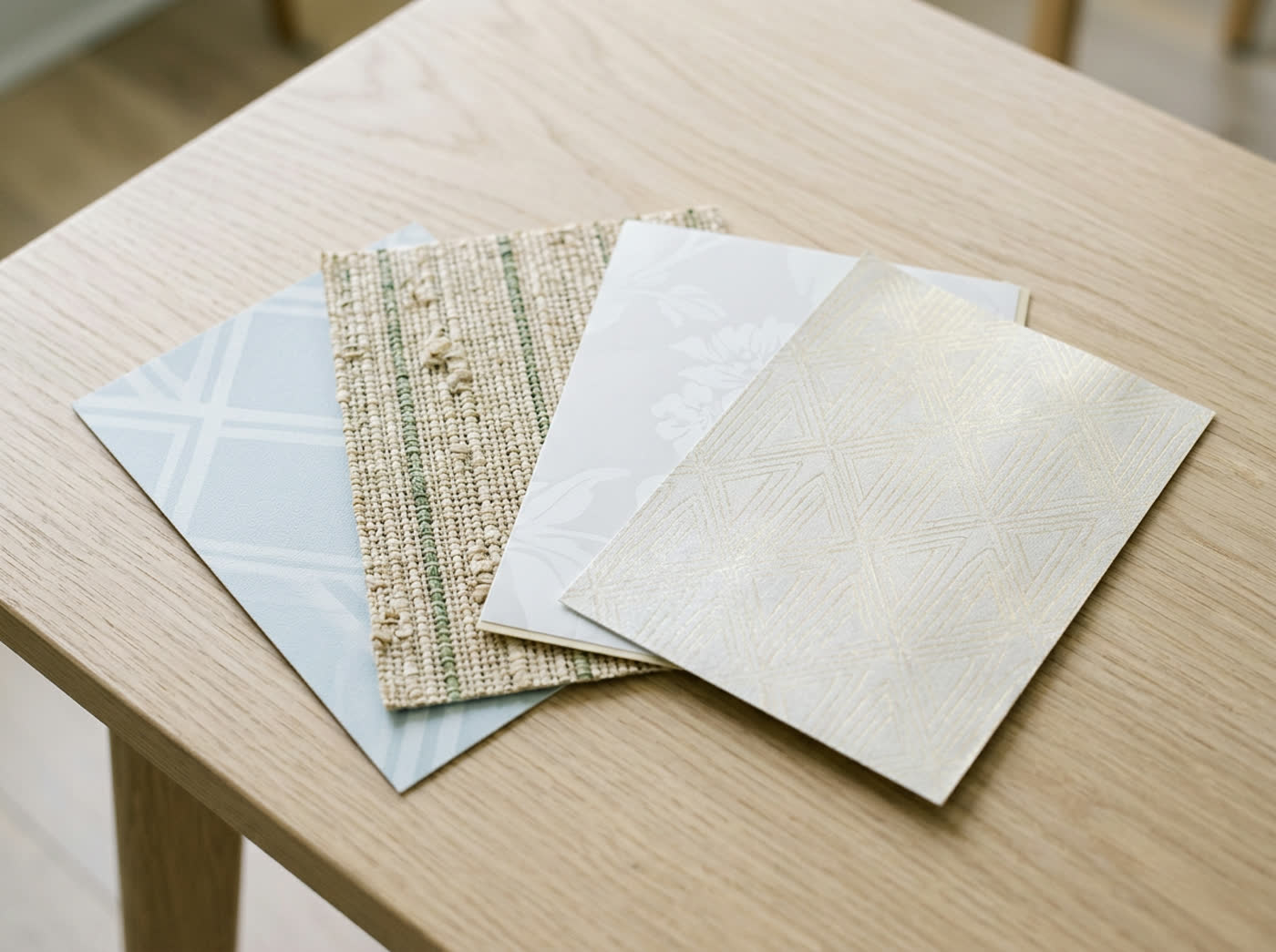
A wallpaper thumbnail tells a customer almost nothing. They cannot tell whether the leaves will be the size of a hand or the size of a chair, and that uncertainty is where the order stalls.
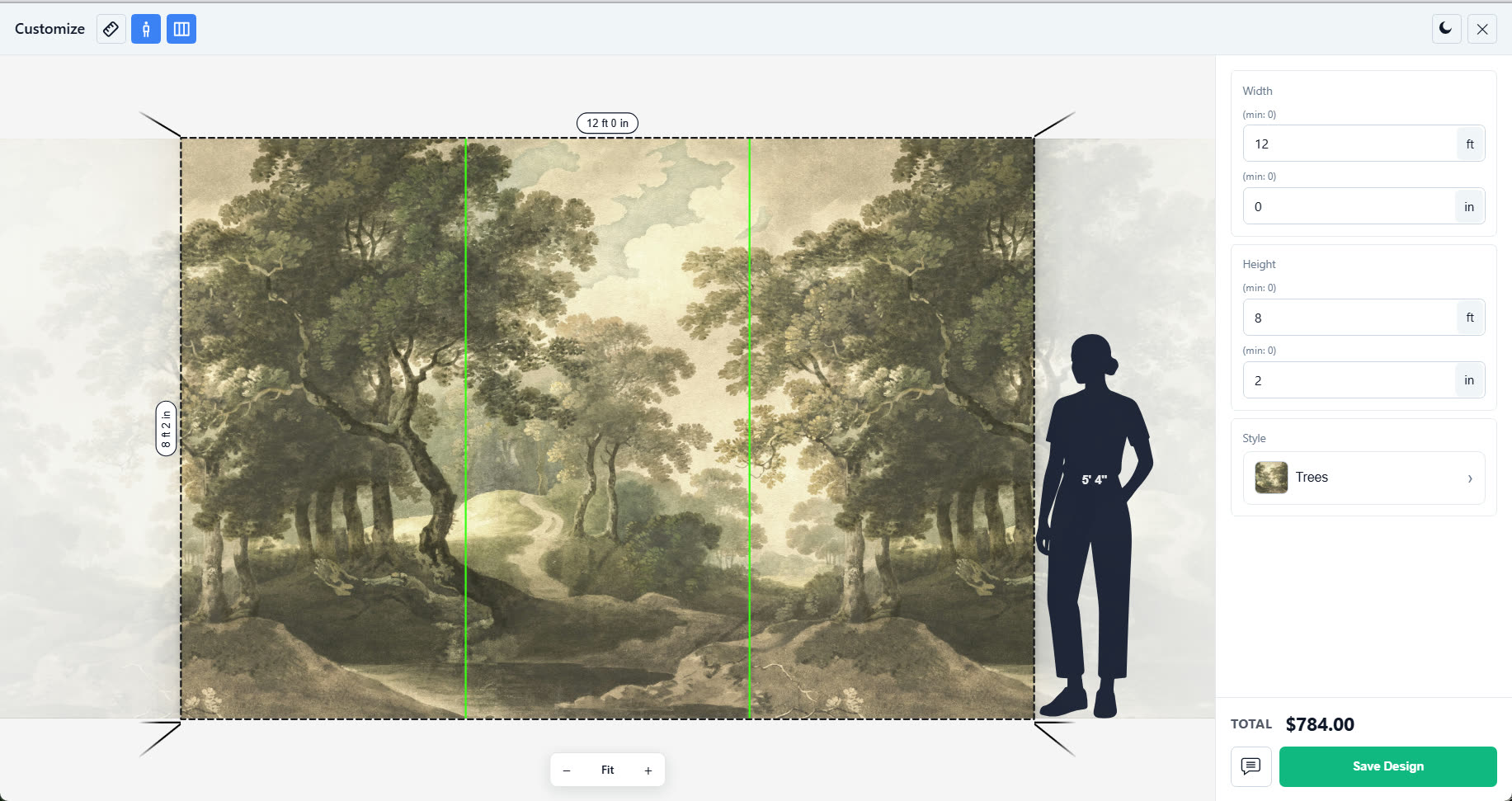
The preview draws the design at its real repeat size against the wall they measured. Rulers show the scale, guidelines show where the seams land, and a 5 ft 4 in figure can stand beside it. The pattern gets judged at the size it will print.
A pattern reads completely differently at full size with furniture in front of it. That is the judgement your customer is trying to make, and a swatch cannot help them make it.
Murals and non-repeating artwork
A repeating pattern takes care of itself. A mural does not. Someone has to place the scene on the wall, and if that someone is you, it happens over email after the order.
Here the customer does it themselves, inside the true-scale frame. The wall dimensions and the panel guides stay locked while they scale and reposition the artwork, so whatever they approve is what prints.
A 14 ft 3 in by 8 ft 2 in wall, switching between murals. The panel guides, the rulers and the figure hold their position, and the total moves with every change.
Every email you send after a wallpaper order is a question you could have asked before it.
How wide is the wall? How tall? Which material? Does the pattern repeat? Where do the seams fall? Is this the part of the artwork you want?
Ask all of it up front, on whichever page they landed on. They measure, watch the price follow, see the design at print size and approve the layout. The order lands with the answers attached.
Customers know what they are ordering. Your production team knows what to produce.
Our Shopify demo store has a working wallpaper calculator on it. Enter a wall size, switch materials, watch the panels and the price change. Nothing to install and no signup.
New: reorder and cart recovery
The measurements, the material, the panel width and the artwork were the order. Ask a customer to rebuild all that and your easiest sale turns into work.
Built for wall covering sellers
These are not generic product options. Each one exists because selling by the wall breaks in a specific way, and this is what it takes to fix it.
14-day free trial with every feature turned on. From $39/month after.
Peel and stick, paste, commercial grade and textured vinyl don't cost the same to buy or print. One flat rate across all of them overcharges on the cheap stock or loses money on the dear one.
Give each material its own square-foot rate and the premium options finally carry their real price. The customer picks the finish they want and your margin holds either way.


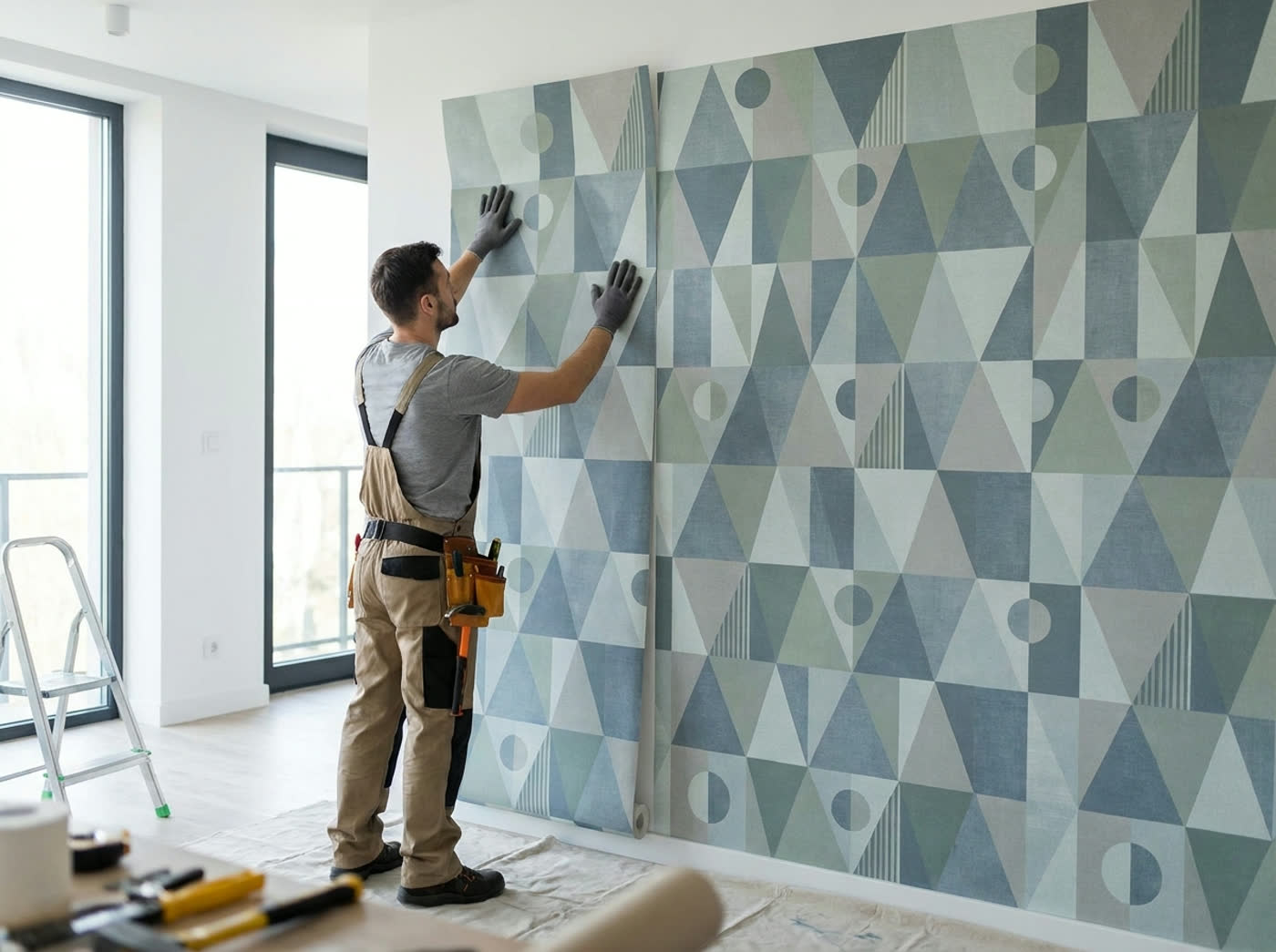
Panel count and seam placement come from your printed roll width and the customer's wall. Both are worked out and shown before the order is placed, not discovered by the installer on the day.
The approved layout stays attached to the measurements, the material and the calculated price, so what arrives on site is what the customer signed off on.
Not a line item you have to chase. Every wallpaper order carries the numbers and the approval with it.
Support comes from the people who build the app. Ask a hard pricing question and you won’t be explaining your trade to a stranger first.
For options, most work fine. Can yours price a wall from two measurements, plan the panels and hold the approved layout on the order? If that happens by email, that's the part this replaces.
Most merchants here don't. You describe your pricing in plain language and the AI setup builds it, or you start from the ready-made wallpaper template and change the rates.
All of that is supported. Pricing tables, formulas with logic, math and rounding functions, variables, conditional rules, fixed fees and minimum prices. If you can explain how you quote a wall, it can be built.
No. Plenty of shops run measurement pricing and a true-scale preview of their own patterns without turning on uploads at all. The designer is optional, product by product.
No. The calculator can load the current product or variant image into the preview, so the right pattern appears for each design from one setup.
Go use it. Our Shopify demo store has a real wallpaper calculator on it, so you can size a wall and see the preview as a customer would, before you install anything.
Everything is included on one plan. There are no feature tiers to climb.
From $39 / month
Less than the material cost of a single reprinted wall.
Or try it live first if you'd rather see it working before you install.
Fourteen days, every feature, no charge. Don't start with a plain accent panel. Take the product you have been quoting by hand, or the pattern whose repeat causes the most questions, and build that one.
If it can't handle your hardest product, you'll know inside a week and you won't have paid anything.
Support is included from day one. Ask them to help you build it.
Measured by the customer. Priced from the real area.
Previewed at true scale and approved.
Panels planned. Proof attached.
All you have to do is print it.
14-day free trial. Free on Shopify Partner dev stores.
Yes. Our Shopify demo store has a real wallpaper calculator with the true-scale preview switched on, at appify-apps.com/collections/wallpaper. No signup needed.
Yes. Total area is calculated from the customer's width and height, then your material and square-foot pricing is applied.
Yes. The preview matches the proportions of the customer's wall and can include rulers, panel guidelines and a person silhouette for scale.
Yes. You can configure horizontal and vertical repeats, fixed-width panels, or non-repeating mural artwork.
Yes. Customers can position uploaded artwork inside the wall preview and approve the final layout before ordering.
Orders can include the customer's measurements, selected materials, pricing information, an approved proof and a production manifest.
No. The app can load the current Shopify product or variant image into the preview, so one calculator serves your whole wallpaper catalogue.
Yes. Pricing can account for the selected material, price per square foot, minimum charges and discounts for larger walls.
No. Options and pricing live outside the variant system, so every wall size does not turn into another SKU.
No. Describe your pricing in plain language and the AI setup builds it, or start from the ready-made wallpaper template.
Yes. Work in draft and publish when you're ready. Every publish saves a version, and you can restore an older one at any time.
From $39 per month, with a 14-day free trial. The subscription scales with how much you use the calculators, and monthly AI credits are included, with an overage charge only if you go past them. Shopify Partner development stores are free.